
Twinsburg, OH · Garage Door Service
Attached or Detached: What Your Twinsburg Garage Door Is Actually Working Against
Twinsburg's housing stock runs 1938-2004, mostly 1960s-70s builds, and that era decided whether your garage sits attached or stands alone out back.
- Repairs & new doors
- Springs & openers
- Serving 7 nearby communities
The Situation
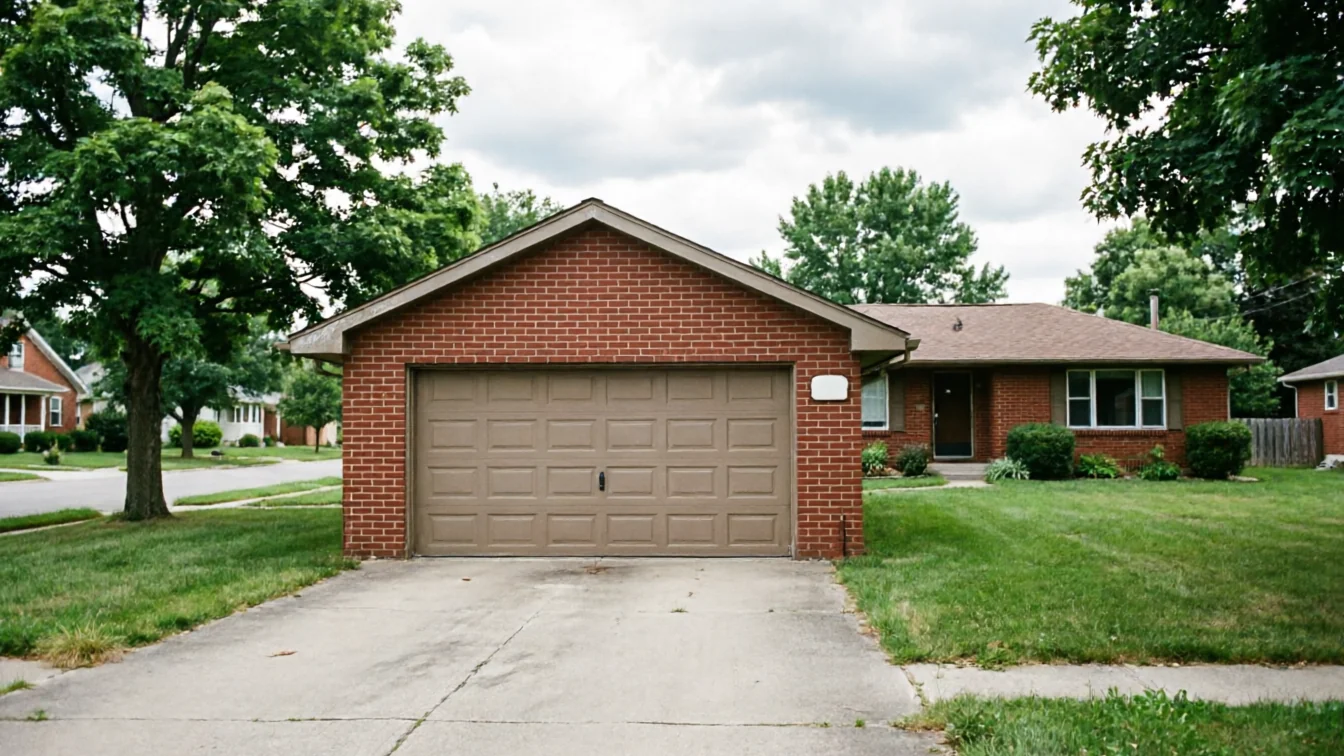
Walk a few streets in Twinsburg and you'll see both setups: garages built onto the house, and garages standing on their own a few car-lengths back. That split isn't random. Twinsburg's housing stock runs from 1938 to 2004, with a median build year of 1967, and most of it falls into that 1960s-70s wave that built out so much of this area. Builders in that stretch weren't locked into one layout. Ranch and split-level plans from the 60s often tucked the garage under the same roofline as the house. Older or more rural lots from the 30s through 50s, and some later infill, kept the garage detached, sitting off to the side or behind. Neither choice was wrong for its decade. But it means the door on your garage is doing a different job depending on which kind of structure it's bolted to, and a lot of homeowners never think about that until the door starts failing in a way that doesn't match the advice they read online.
What Most People Get Wrong
The common mistake is treating a detached garage door like a smaller version of an attached one. It isn't. An attached garage usually shares a wall with heated living space, so even an uninsulated door gets some residual warmth bleeding through the shared structure. A detached garage out back has no such help. It sits exposed on all four sides, and in a Twinsburg winter that difference shows up fast - condensation on the inside of the panels, a slower opener cycle in the cold, hardware that stiffens up sooner than the same parts would on an attached door fifteen feet away. People also assume the fix is the same part number regardless of which structure it's on. It isn't. A detached garage door is working harder against the same cold with less help from the house, which means the weight of insulation, the seal quality at the bottom, and even the gauge of the track matter more there than they do on an attached door of the same size.
How Local Conditions Play In
Twinsburg sits in a climate band rated cold-severe, and that rating isn't decorative - it's the reason the gap between attached and detached performance is real here rather than theoretical. On an attached door, the shared wall and the furnace on the other side of it keep temperature swings inside a narrower range, so standard weatherstripping and a mid-grade insulated panel usually hold up fine for the life of the door. On a detached structure, the door is the only thing standing between the inside and whatever the outside is doing, with no backup heat source nearby. That's where springs lose tension faster in deep cold, where nylon rollers get brittle sooner, and where a bottom seal that was adequate on an attached door starts letting in enough cold air to matter. If your garage is detached and built in that 1960s-70s window like most of the housing here, the hardware inside it is often original-era steel that was never speced for the insulation standards expected of a door today.
Leaving It Alone
Here's where I'll be straight with you: not every mismatch needs fixing right away. If you've got an attached garage with an uninsulated door from the 60s or 70s build wave, and the space behind it isn't heated or used for anything but the car, leaving it alone through another winter isn't going to hurt anything structural. The door will keep working. What changes the math is a detached garage, because there's no shared wall buying you any slack - a door that's starting to drag or seal poorly out there is going to keep getting worse at a faster rate than the same door would attached to the house. I won't tell you to replace a door that's still opening and closing fine just because of its age. But if you're hearing extra strain on the opener in cold weather and your garage stands on its own, that's not a symptom to sit on.
Frequently asked questions
Does it matter if my garage door is insulated on a detached garage versus an attached one in Twinsburg?
Yes. An attached garage gets some passive warmth through the shared wall with the house, so an uninsulated door is more forgiving there. A detached garage has no such buffer, and in this area's cold-severe climate that gap shows up as stiffer hardware and faster seal wear on the door of a standalone structure.
Is my garage door original to the house if it was built in the 1960s or 70s?
It's possible. Twinsburg's housing runs 1938 to 2004 with a median build year of 1967, and a lot of that stock hasn't been touched since. If your garage, attached or detached, hasn't had a door replacement on record, original-era steel hardware speced to older standards is a reasonable guess.
Why does my detached garage door feel harder to open in winter?
A detached structure has no shared wall with heated living space, so it feels the full swing of a cold-severe climate on every side. Springs lose tension faster in deep cold and seals stiffen sooner than they would on an attached door of the same age and size.
Related garage door services in Twinsburg
More garage door guides
Book garage door service in Twinsburg
Call now or request a quote - tell us what the door is doing and where you are.