
Twinsburg, OH · Garage Door Service
Why Garage Door Sensors Drift in Twinsburg Homes
Twinsburg homes built mostly in the 1960s and 70s have garage door sensors that drift with cold-weather shifts. Here's why, and what it means for your door.
- Repairs & new doors
- Springs & openers
- Serving 7 nearby communities
The Situation
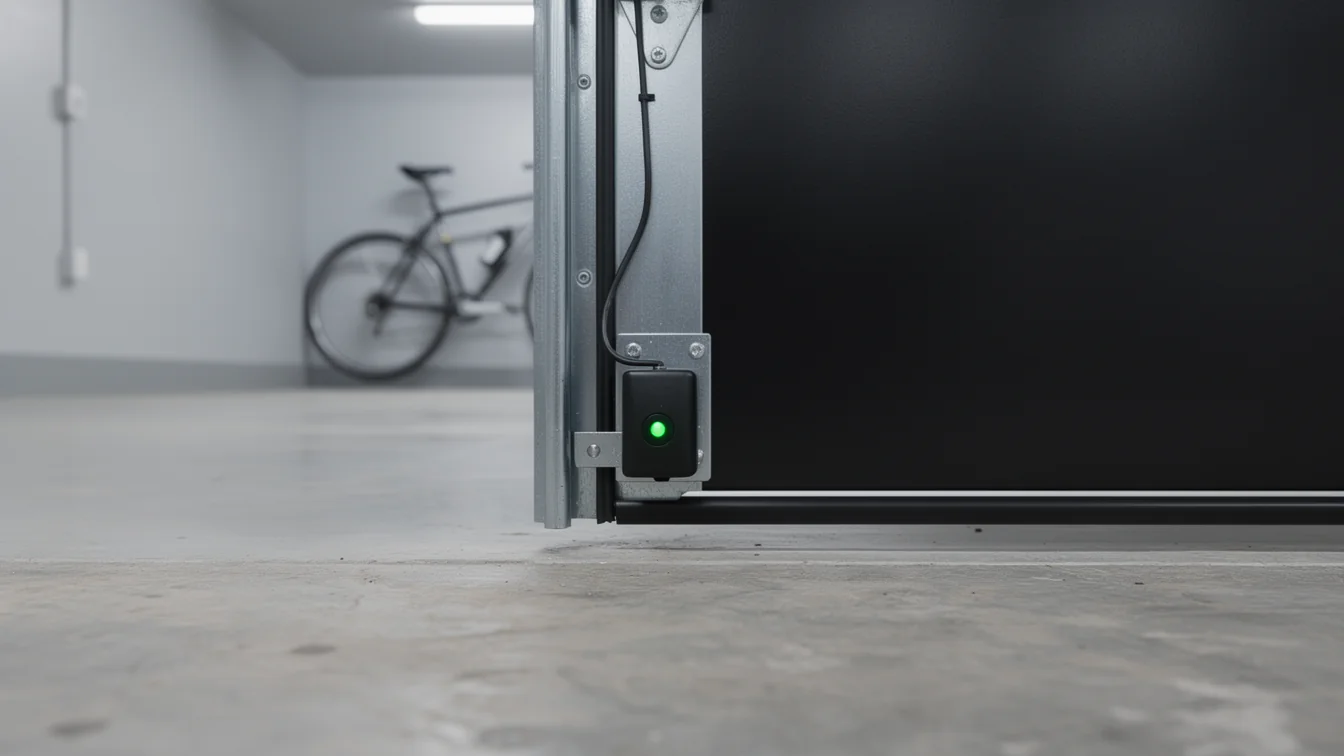
If your opener hums, the door starts down, and then it kicks back up for no reason, the sensors are the first place to look, not the opener. Those two small eyes near the bottom of the track are the photo-eye safety sensors, and in Twinsburg they're doing more work than people expect. The typical house in this area dates to around 1967, with most of the stock going up through the 1960s and 70s. Garage doors from that era weren't built with photo-eye sensors at all - the federal rule requiring them didn't arrive until 1993. So on a lot of these houses, what you're looking at is a retrofit: a bracket and a sensor bolted onto a door and frame that were never designed to hold them. That's not a defect, it's just the timeline. But it means the mounting is often an afterthought, screwed into wood trim or a slab edge that's done some settling over fifty-plus years. When a homeowner calls saying the door 'won't close right,' nine times out of ten we're talking about one of these two eyes being out of true by a few degrees, not a dead opener board.
What Most People Get Wrong
The common mistake is assuming the opener itself is failing and either replacing it outright or living with the problem by holding the wall button down to force the door shut. Both are the wrong call on a sensor issue. Forcing the door with the wall button defeats the safety sensor on purpose, which is the one thing it's there to prevent - stopping a door on a kid, a pet, or a bike that rolled into the path. The second mistake is cleaning the lenses, declaring it fixed, and not checking alignment. A smudged lens causes a flicker; a knocked-out-of-true bracket causes a dead short in the beam path that no amount of wiping solves. Since so much of Twinsburg's housing stock is from that same two-decade window, the retrofit brackets holding these sensors are nearly all the same age and starting to fail at the same time - the screws loosen, the thin metal bends, and the eye that used to line up now points a hair off center. That's an alignment job, and it's a five-minute fix once you know that's what it is. Replacing a working opener because of a misaligned sensor is money spent on the wrong part.
How Local Conditions Play In
Twinsburg sits in a climate band rated cold and severe, and that's exactly the kind of frost heave that shifts a slab enough to throw a sensor eye out of alignment more than once a winter. A 1960s Twinsburg garage built on an unheated slab doesn't move the same way a newer poured foundation does - freeze-thaw cycles work at the edges of that older concrete every year, and the door frame bolted to it moves with it, even if it's only a sliver. The bracket holding the sensor doesn't move with the frame at the same rate, especially if it's mounted to wood trim instead of the slab itself. Over a winter or two, that mismatch is enough to tip the beam a few degrees off true. You'll usually notice it as the door reversing right at the bottom of its travel, or refusing to close fully on the coldest mornings and working fine by afternoon once things warm and settle. That pattern - cold-morning failure, afternoon normal - is the signature of a sensor that's just barely out of alignment, not a dying board or a bad motor.
Leaving It Alone
A door that won't close isn't just an inconvenience - it's an open garage overnight in a cold-and-severe climate, which means heat loss, exposed pipes on an attached wall, and an easy way in for anything that wants to get into the garage. Ignoring a misaligned sensor by holding the button down to force the door shut is the worst version of leaving it alone, because it removes the one safety feature doing its job. The honest limitation here: realigning a sensor is usually quick, but if the bracket itself is bent, the mounting screws have stripped the wood behind them, or the slab has settled enough that the frame is no longer square, that's a different job - one that needs a new bracket or a shimmed mount, not just a loosened screw and a nudge. We won't tell you it's a five-minute fix if the frame's moved that much. On a house from the 1960s or 70s stock that makes up most of this area, that kind of frame movement isn't rare after five decades of winters, so it's worth having someone actually sight the beam rather than guessing from the flicker on the opener's light.
Frequently asked questions
Why does my garage door only act up on cold mornings?
That's the classic sign of a sensor that's slightly out of alignment rather than a failing opener. Overnight cold causes small movement in an older slab and door frame, enough to tip the beam path off for a few hours. Once things warm up and settle, the beam lines back up and the door closes normally again.
Is it safe to just hold the button to force the door shut?
No. Holding the wall button overrides the safety sensor on purpose, which defeats the one feature meant to stop the door on a person, pet, or object in its path. If the door won't close on its own, the sensor is telling you something is blocking or misaligning the beam - fix that instead of overriding it.
My house is older - why does it even have these sensors?
Houses built before 1993 weren't required to have photo-eye sensors, so if your Twinsburg house dates to the 1960s or 70s like most around here, the sensors were added later as a retrofit onto the original door and frame. That's normal, but it also means the mounting is often less solid than on a newer build.
Related garage door services in Twinsburg
More garage door guides
Book garage door service in Twinsburg
Call now or request a quote - tell us what the door is doing and where you are.