
Twinsburg, OH · Garage Door Service
Wind, Wide Doors, and Twinsburg's Housing Stock
Why wide double doors built during Twinsburg's 1960s-70s housing boom flex and fail under wind load, and what the cold climate band adds to that stress.
- Repairs & new doors
- Springs & openers
- Serving 7 nearby communities
The Situation
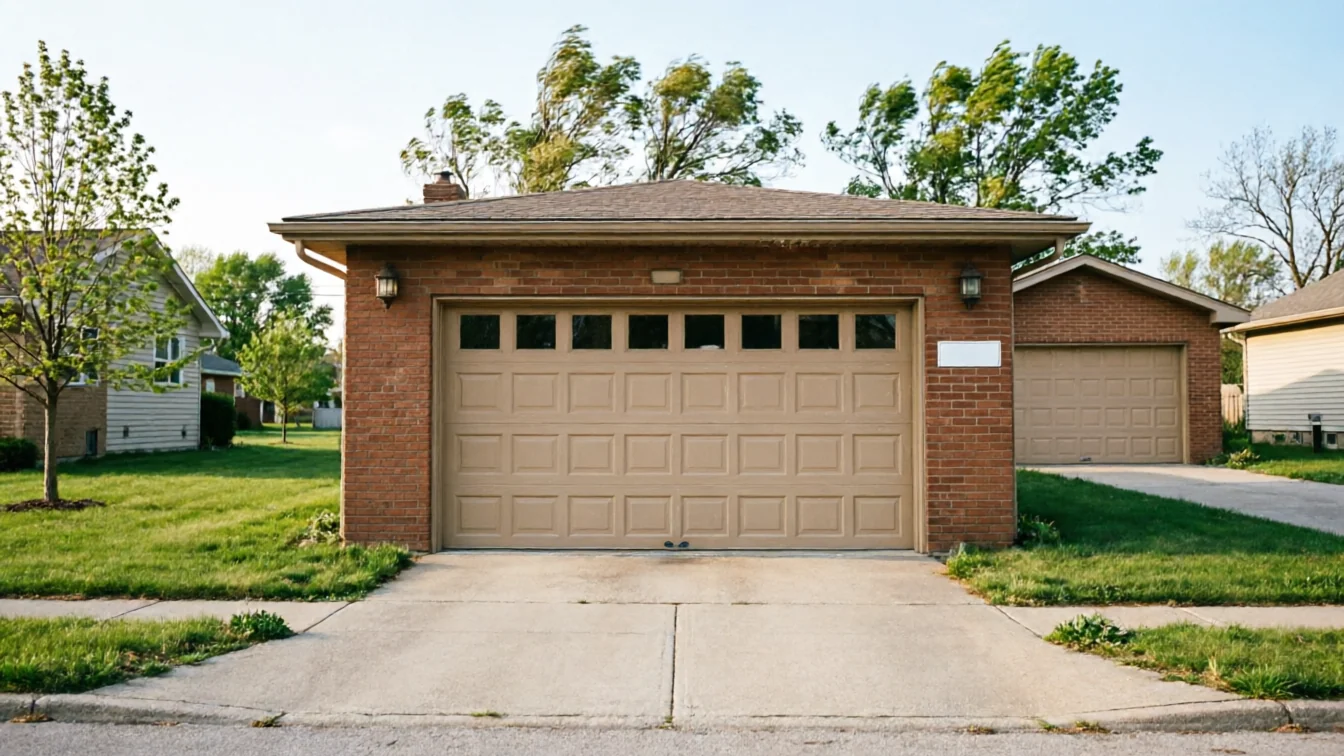
Most of the houses in this part of Twinsburg went up between 1938 and 2004, with the bulk of the stock dating to the 1960s and 70s and a median build year of 1967. That era favored attached garages with a single wide door, usually 16 feet across, rather than two separate single doors. A 16-foot door has roughly double the surface area of a 9-foot door, which means it catches roughly double the wind load for the same gust. On a house built in 1967 with original or near-original hardware, that panel was engineered to a different, lighter standard than what gets installed today. The door itself isn't the only thing moving - the track, the end stiles, and the header above the opening all take a share of that load, and on a 55-plus-year-old structure, that header has had decades to settle slightly out of true. We're in a severe cold climate band here, and cold makes steel brittle and vinyl seals stiff, which changes how much flex a panel can absorb before something gives.
What Most People Get Wrong
The common assumption is that a garage door fails from one big gust - a storm event, something dramatic. In practice, a wide door usually gives out from repeated smaller flex cycles over years, not one dramatic moment. Each gust bows the panel slightly inward or outward; the steel skin springs back, but the stress goes somewhere - into the seams, the roller brackets, or the track bolts. On the double-wide doors common to this area's 1960s and 70s housing stock, the center section of the door has the least support, since there's no center post the way there is on two single doors. Owners notice the symptom - a rattle, a gap at the bottom corner, a track that's bent slightly outward - long before they connect it to wind. By the time it's visible, the hardware has usually been working loose for a season or two, not a week.
How Local Conditions Play In
Cold severe climate changes the math in a way that's easy to miss. Steel contracts in cold temperatures, which means panel seams and roller tracks that were snug in July can run slightly loose by January - right when wind loads on an exposed door are often highest for the season. A loose track gives a wide door more room to rack side to side under a gust, and racking is what eventually cracks a weld or bends a hinge, not a single straight-on push. Add in the age of the housing stock - a median build year of 1967 means a lot of these garages have never had their track hardware upgraded past what came with the house. On a 16-foot door, that original hardware was sized for a lighter panel than most replacement doors sold today. If you've swapped in a heavier insulated door without upgrading the springs and track brackets to match, the wind-flex problem gets worse, not better, even though the door itself is newer.
Leaving It Alone
A wide door that rattles in the wind but still opens and closes fine is easy to leave alone, and most of the time that's a reasonable call for a season. We won't tell you to replace hardware that's working. What we will say is that a bent track or a loosening center stile on a 16-foot door doesn't self-correct - it's a mechanical problem, not a cosmetic one, and it tends to get more expensive the longer it runs, not less. We don't do structural header repair; if the wind flex has started pulling at the framing above the opening rather than just the door and track, that's a carpenter's job before it's ours. For straightforward track, roller, and brace work on a wide door, we're reachable through the site at /.
Frequently asked questions
Is my garage door actually at risk from wind, or is the rattling just normal?
Some rattle on a 16-foot door is normal, especially on older hardware. The difference is whether the rattle is getting louder or the gaps at the corners are getting wider over a season. If it's stable, it's likely fine. If it's progressing, the track or stiles are losing their grip and it's worth a look.
Why does my garage door feel looser in winter than in summer?
Steel contracts in cold weather, and in a severe cold climate like ours that swing is real. Track bolts and panel seams that are snug in warm months can run looser in January, which gives a wide door more room to flex and rack under wind. It's usually not a new problem, just an old one showing more in the cold.
Do I need to replace the whole door if the track bends from wind?
Not always. A bent track section can often be replaced on its own without touching the panel. But on older houses with original 1960s or 70s hardware, we'll check the springs and brackets too, since a new track paired with worn springs just shifts the stress somewhere else.
Related garage door services in Twinsburg
More garage door guides
Book garage door service in Twinsburg
Call now or request a quote - tell us what the door is doing and where you are.